QA Wolf Alternatives for Startups: 7 Self-Serve, Startup-Priced Options (2026)

Why startups look past QA Wolf
QA Wolf is a good product. It sits at 4.8 out of 5 on G2, and it runs your QA for you: its engineers build the suite and promise around 80% automated coverage inside four months. Quality is not the issue. Fit is.
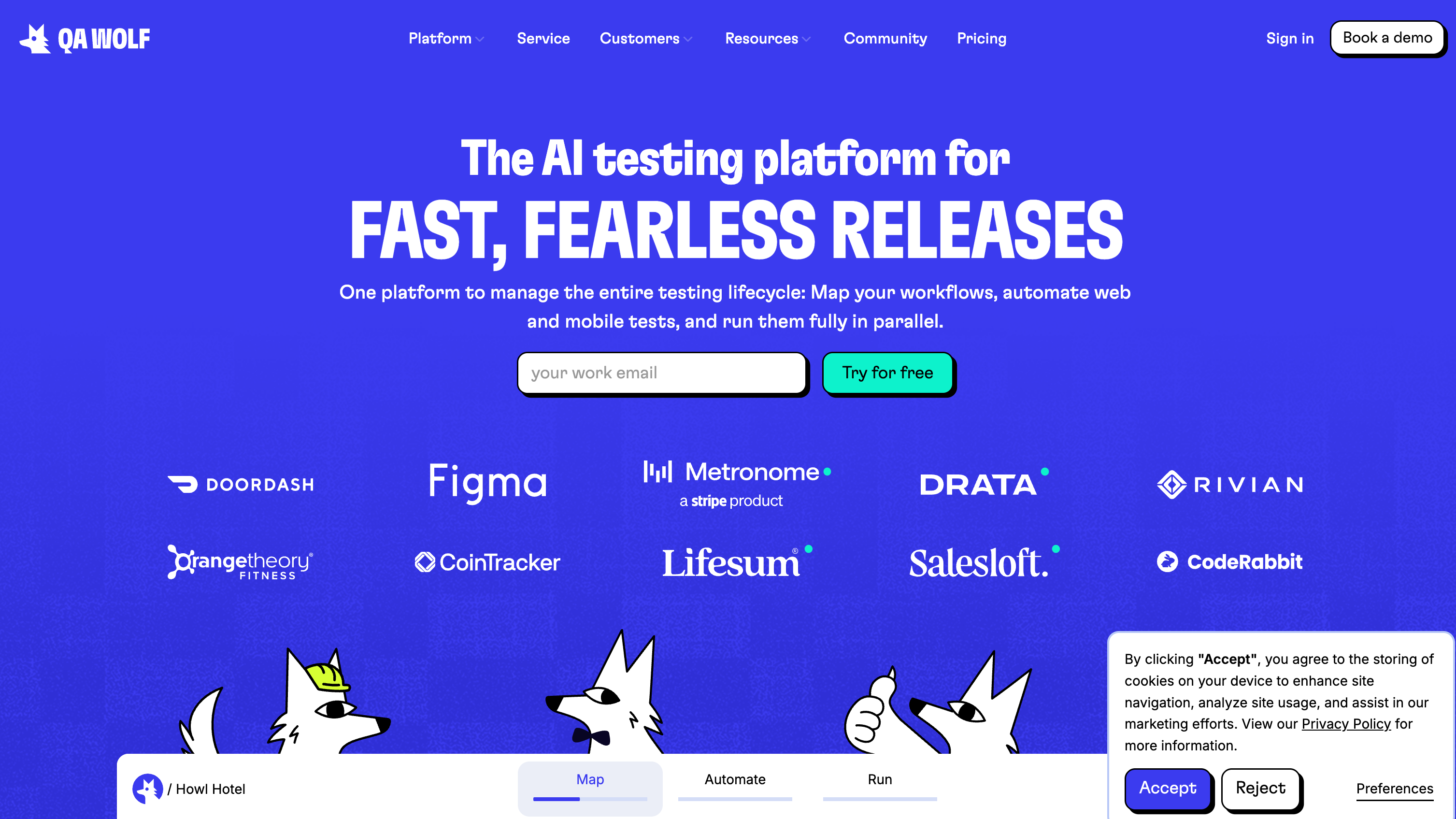
Here is where it breaks down for a small team.
- Price. Contracts run from about $60k to $250k a year, and the median lands near $90k. For a pre-seed or Series A team, that is more than the entire tooling budget.
- Motion. You buy it through a demo and a sales call, then wait out a multi-month rollout. You cannot try it on your app this afternoon.
- You do not own the tests. QA Wolf's engineers own them, not you. That is the point if you want QA off your plate. It is a problem if your developers want to read and edit tests inside your own repo.
- It tests, it does not monitor. QA Wolf covers regressions on your pull requests. It does not sit on your live app and keep watching the critical flows on a schedule.
The numbers explain the gap. A QA engineer in the US runs $70k to $100k a year, which rarely pencils out before you have revenue. And hand-written end-to-end tests are their own tax: maintenance can eat up to 80% of the time a team spends on testing. What a small team actually needs is coverage of the handful of flows that matter, without a hire and without a six-figure contract. These seven tools get you there.
How we ranked these
We sorted by how fast a team with no QA can get real coverage: self-serve signup, plain-language authoring, low maintenance, and support for both web and mobile. Managed services and enterprise platforms land lower here, not because they are weak, but because they cost more and take longer to start. Full disclosure: we build Watchr, so we kept it to a single entry in the middle of the list, called out where it falls short, and linked every competitor so you can check them yourself.
| Tool | Model | Starting price | Who writes tests | Web / Android | Best for |
|---|---|---|---|---|---|
| QA Wolf | Managed service | ~$90k/yr (quote) | QA Wolf's engineers | Web + mobile | Funded teams outsourcing QA entirely |
| testRigor | Self-serve, plain-English | Paid tiers | You, plain English | Web + mobile | Mixed technical and non-technical teams |
| Momentic | Self-serve, AI-native | ~$49/mo + credits | You, plain English | Web-first | Dev teams that want cheap AI end-to-end |
| Watchr | Self-serve AI QA agent | Free to start | You, in plain English | Web + Android | Teams that want testing plus scheduled monitoring |
| Reflect | No-code recorder | Paid | You, record and replay | Web | Non-technical web QA |
| Octomind | AI test generation | Free tier | AI plus you | Web | Dev teams keeping tests in the codebase |
| mabl | Enterprise platform | Enterprise (quote) | Your QA team | Web + mobile + API | Established QA orgs, regulated industries |
The 7 alternatives, and who each one is for
1. testRigor: best for mixed technical and non-technical teams
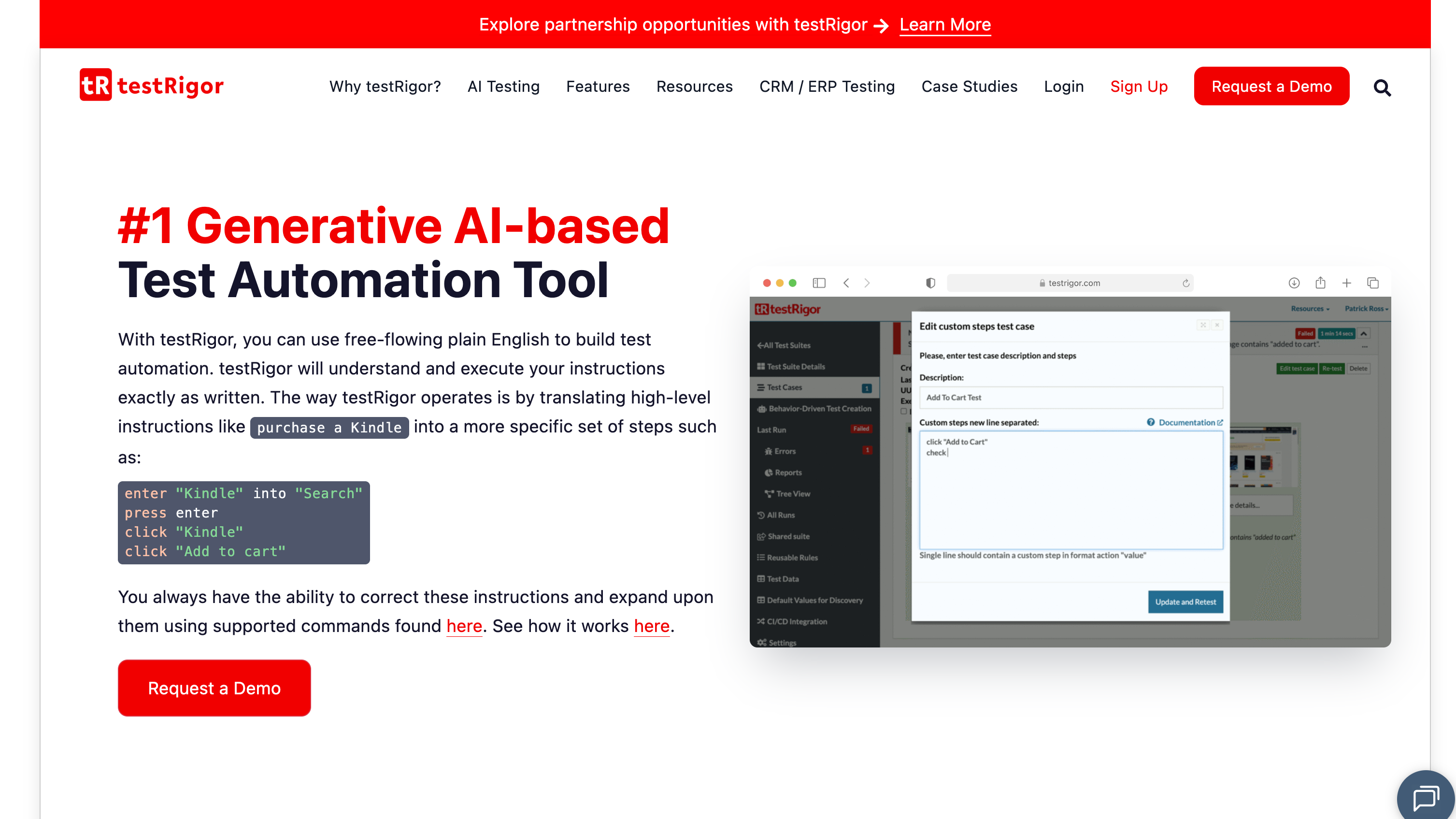
testRigor lets you write tests in plain English that map to real user actions, so a PM and an engineer can keep the same suite alive. It handles web and mobile. It is built for writing tests rather than autonomously monitoring them, but if several roles touch QA, it is a strong self-serve pick.
2. Momentic: best for cheap, AI-native end-to-end
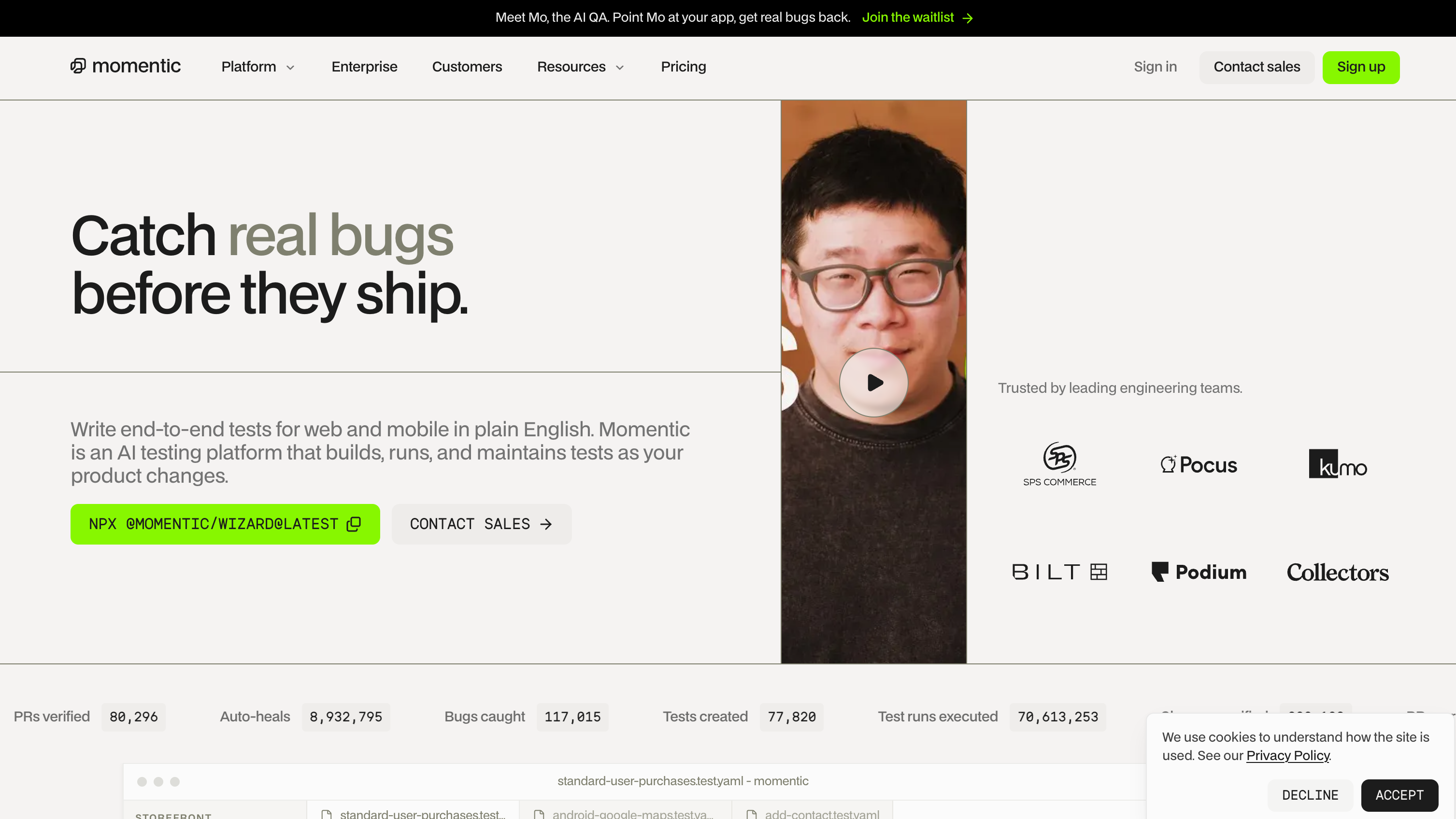
Momentic is AI-native to the core. You write tests in plain English, and its intent-based locators heal themselves when the UI shifts. Pricing starts around $49 a month with a free tier and usage credits, so a small team can afford it. It leans web-first, so reach for it when your product is mostly a web app.
3. Watchr: best when you want to test and keep watching
Watchr is an AI QA agent you point at a web URL or an Android app. You tell it what to check in plain language. It builds the test, runs it, and can run it as different personas, say a first-time user, a slow network, or another locale, then re-runs everything on a schedule and drops the results into a shared team feed.
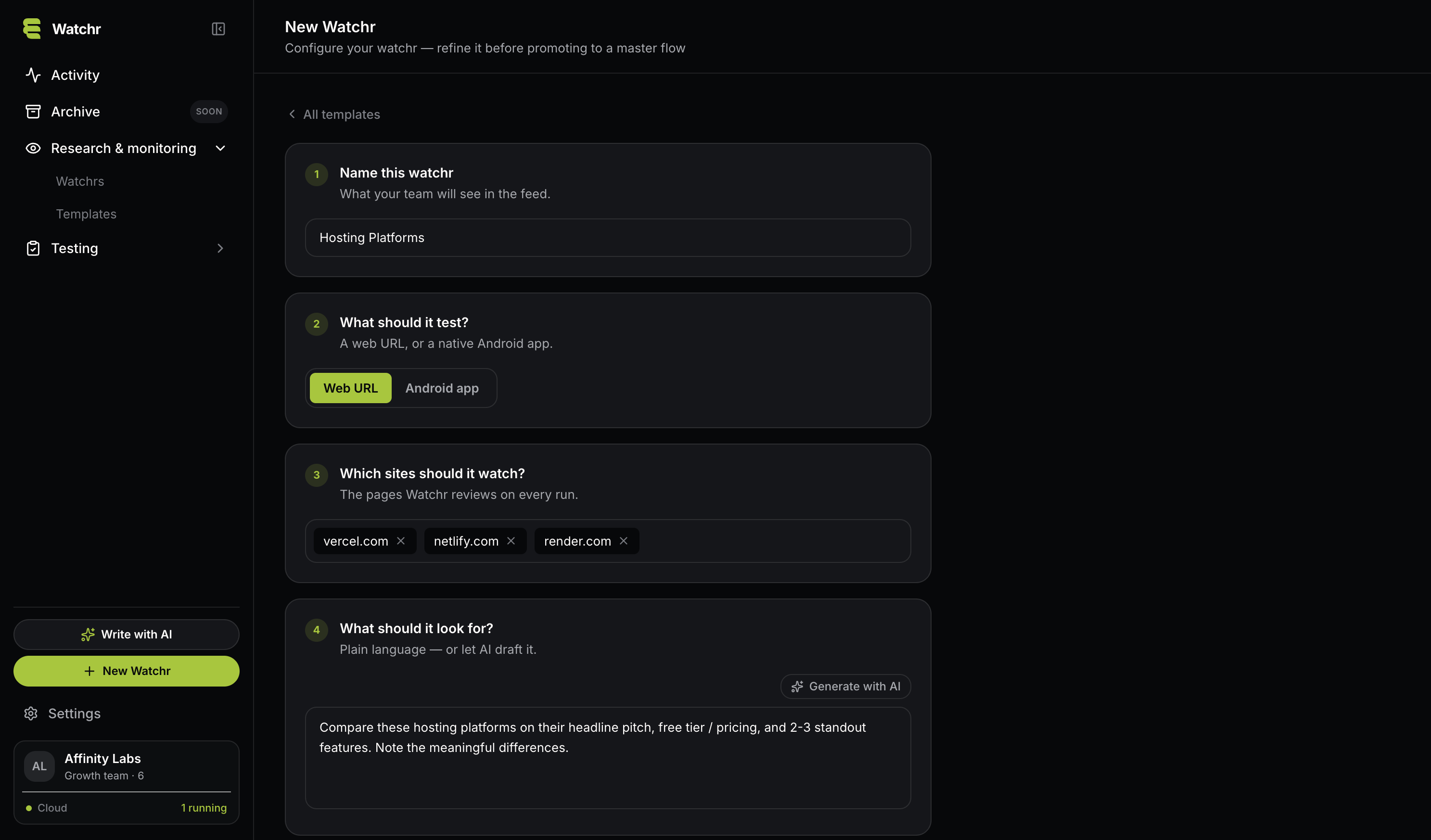
Because it is self-serve, there is no demo gate and no four-month rollout. You cover your critical flows the same day, and it keeps watching them instead of only checking a pull request.
Where it falls short: Watchr is newer than QA Wolf and mabl, so it has a shorter track record and fewer enterprise integrations. It covers web and Android today, not native iOS. If you need an audited enterprise vendor with a long reference list right now, start with mabl or QA Wolf.
4. Reflect: best for non-technical web QA
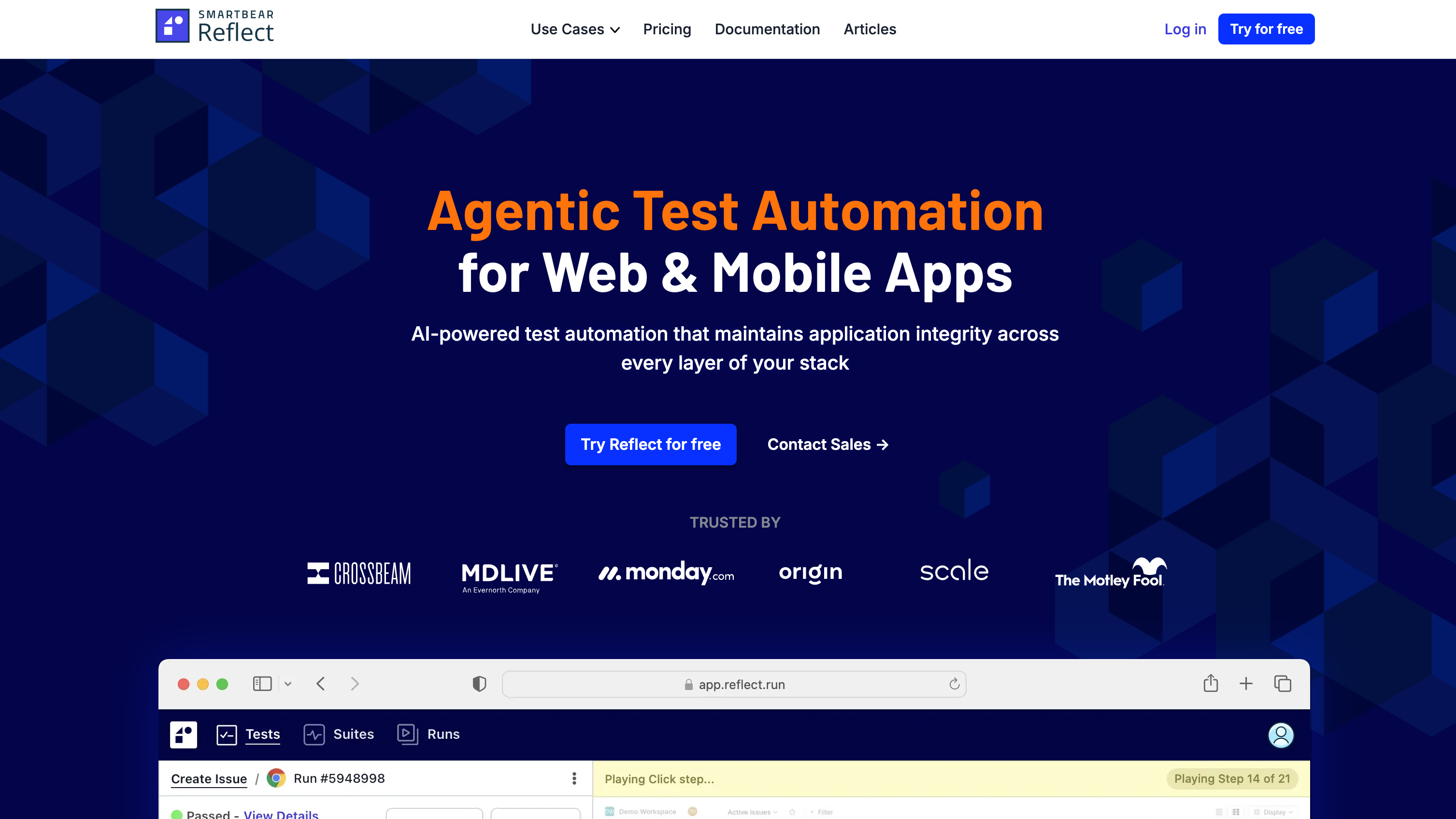
Reflect records what you do. You click through your web app and it captures a repeatable test, no code involved. It is fast to start and friendly to non-engineers, and it is a fair choice when your needs are web only.
5. Octomind: best for dev teams that keep tests in the repo
Octomind uses AI to generate and maintain Playwright tests that live next to your code, and it has a free tier. It suits developer-led teams that want the AI to do the busywork but still want tests they own and can review in git.
6. Bug0 and Scandium: best for a self-serve safety net
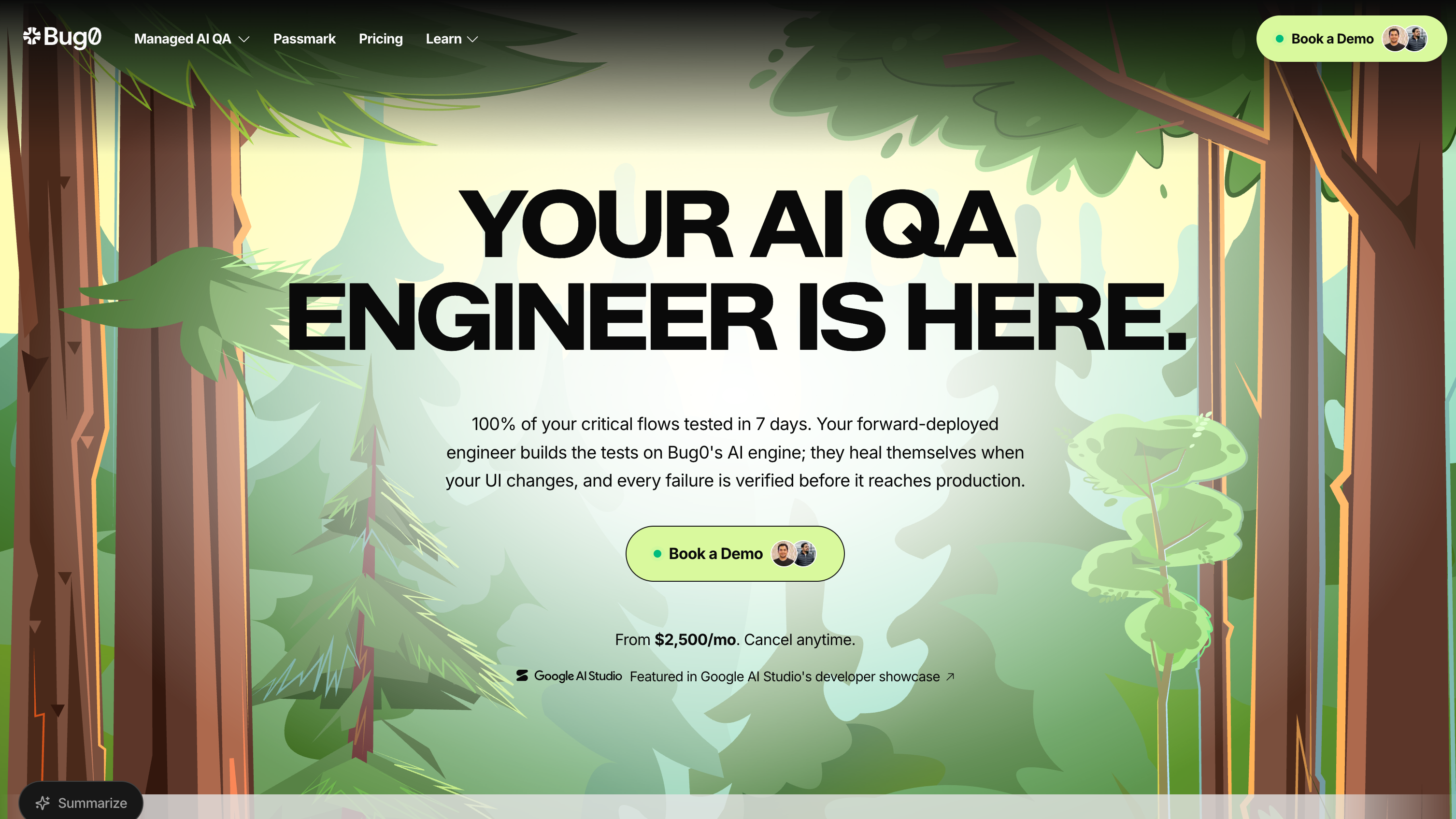
A newer crop of self-serve tools aims squarely at the no-QA-team startup, automating your handful of critical flows without a managed contract. They are worth a look when you want to line up a few self-serve options side by side.
7. mabl: best if you are actually enterprise
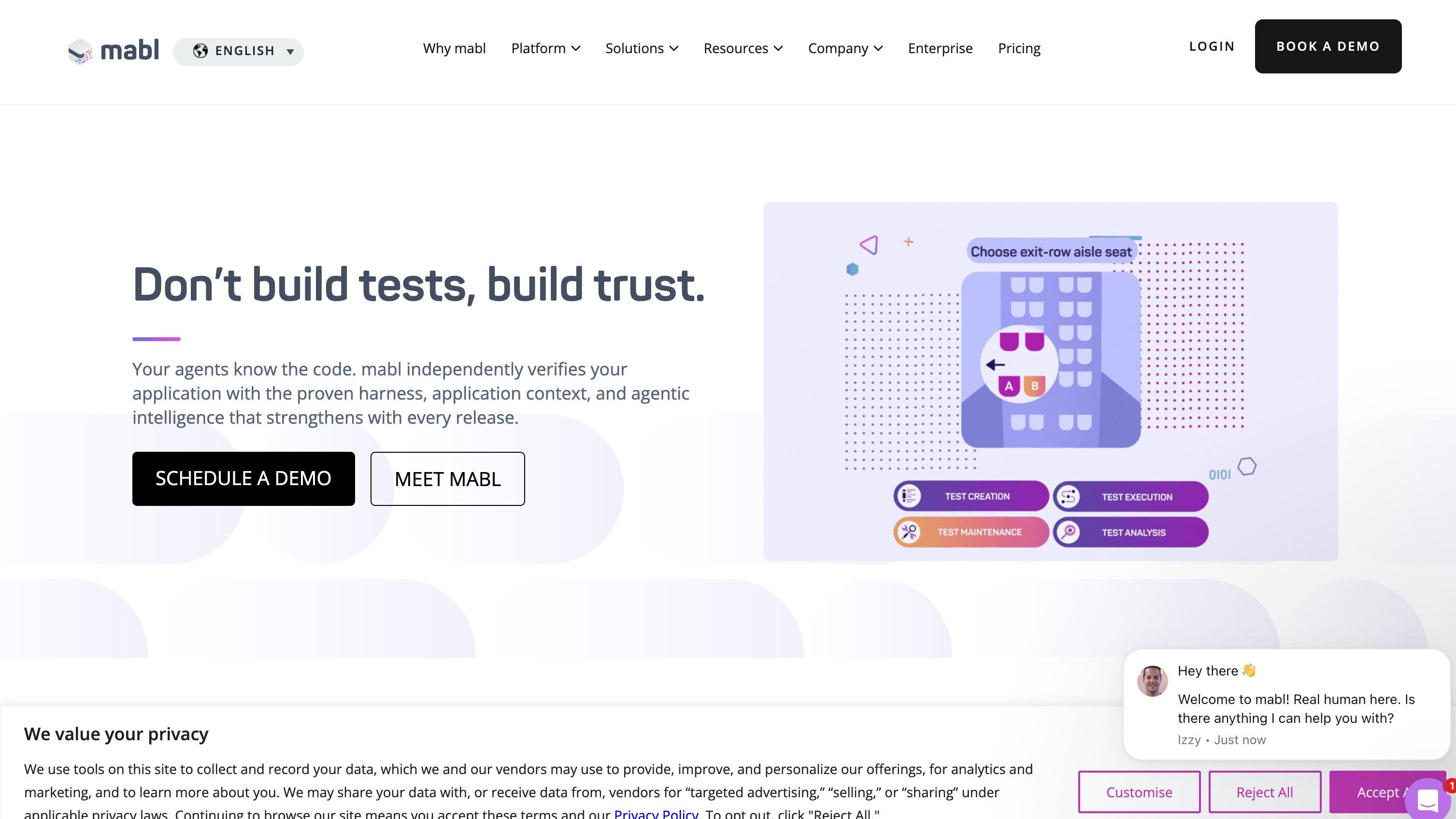
Further along, with a real QA team, compliance rules, and web, mobile, and API to cover? mabl is a mature low-code platform built for that scale. It is overkill for a three-person startup and a solid fit once QA is a real function.
How to choose
- Non-engineers will help maintain tests? Look at testRigor or Reflect.
- Web only and cost sensitive? Momentic or Octomind.
- You want testing plus monitoring across web and Android? Watchr.
- You have the budget and want QA fully outsourced? QA Wolf is still a great choice. This list is about fit, not a knock on the product.
Frequently asked questions
How much does QA Wolf cost?
QA Wolf uses managed-service pricing. Expect roughly $60,000 to $250,000 a year, with the median contract near $90,000. There is no public self-serve price, so you book a demo to get a quote.
Who are QA Wolf's competitors?
The usual alternatives are self-serve AI QA tools like testRigor, Momentic, Watchr, Reflect and Octomind. On the enterprise end there is mabl and Tricentis. If you do not have a QA team, the self-serve tools tend to fit better.
What is the best QA Wolf alternative for a startup with no QA team?
It depends on your stack. testRigor suits mixed technical and non-technical teams, Momentic is a cheap web-first option, and Watchr adds scheduled monitoring across web and Android. All are self-serve and cost a fraction of QA Wolf.
Is QA Wolf worth it?
For a funded team that wants QA fully off its plate and has the budget, yes. For a pre-seed or Series A startup it is usually more than you need, and a self-serve tool covers the flows that matter for a fraction of the price.
Start testing your app today. No QA hire required.
Watchr tests and monitors your web and Android app from a plain-language brief. Point it at your product and cover your critical flows this afternoon.
Try Watchr free →